

The Infrastructure Stack for Autonomous Economies
Agentic AI + Crypto

Why Ethereum May Become the Settlement Layer for the Machine Economy
The market still thinks crypto is primarily about speculation.
That framing is rapidly becoming obsolete.
A much larger transition is underway — one emerging at the intersection of AI, programmable finance, decentralized identity, tokenization, and autonomous machine coordination.
The next crypto cycle may not be driven primarily by retail enthusiasm or meme speculation. It may instead be driven by the rise of machine-native economic systems.
And if that thesis is correct, blockchain networks — particularly Ethereum — become critical infrastructure.
Not optional infrastructure.
Foundational infrastructure.
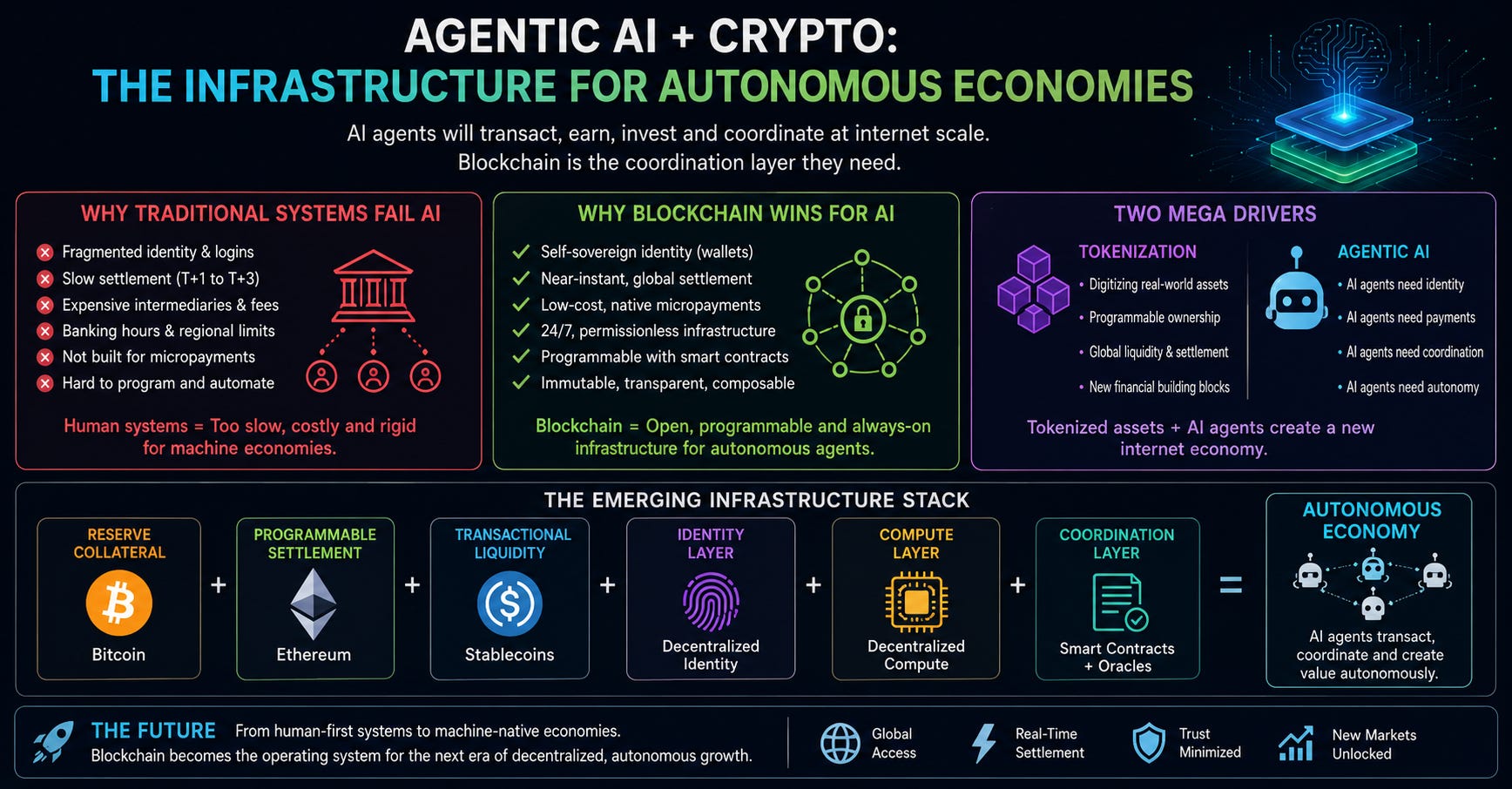
The simplified framework above captures the core idea: AI-native economies require programmable, always-on financial infrastructure, and blockchain networks are emerging as the coordination layer for autonomous systems.
Further below, we break down the full infrastructure stack in detail — including decentralized identity, stablecoins, programmable settlement, smart contracts, tokenization, decentralized compute, and why Ethereum may become foundational infrastructure for machine-native economies.
The Big Shift: From Human Economies to Machine Economies
For decades, the internet was designed around humans:
humans authenticate
humans click buttons
humans approve payments
humans settle disputes
humans coordinate workflows
But agentic AI changes the architecture of economic activity itself.
We are entering a world where:
AI agents negotiate
AI agents transact
AI agents lease compute
AI agents purchase data
AI agents allocate capital
AI agents coordinate supply chains
AI agents execute software workflows autonomously
This creates an entirely new infrastructure requirement.
Traditional financial rails were never designed for autonomous machine economies.
Why Traditional Systems Break at AI Scale
Legacy systems depend on:
centralized identity
banking intermediaries
settlement delays
card networks
batch processing
jurisdictional fragmentation
human verification loops
Those constraints become catastrophic bottlenecks when machines transact continuously at internet scale.
An autonomous AI system cannot efficiently operate if:
every API requires manual credential management
micropayments incur fixed card fees
transactions settle in days
access depends on banking hours
global execution requires multiple intermediaries
Human financial infrastructure is simply too slow, fragmented, and expensive for machine-native commerce.
This is where crypto infrastructure becomes structurally important.
Blockchain as the Coordination Layer for AI
The most important insight emerging today is this:
Blockchain is not merely digital money.
It is a coordination system for autonomous economic actors.
That changes everything.
Crypto networks provide characteristics that AI systems naturally require:
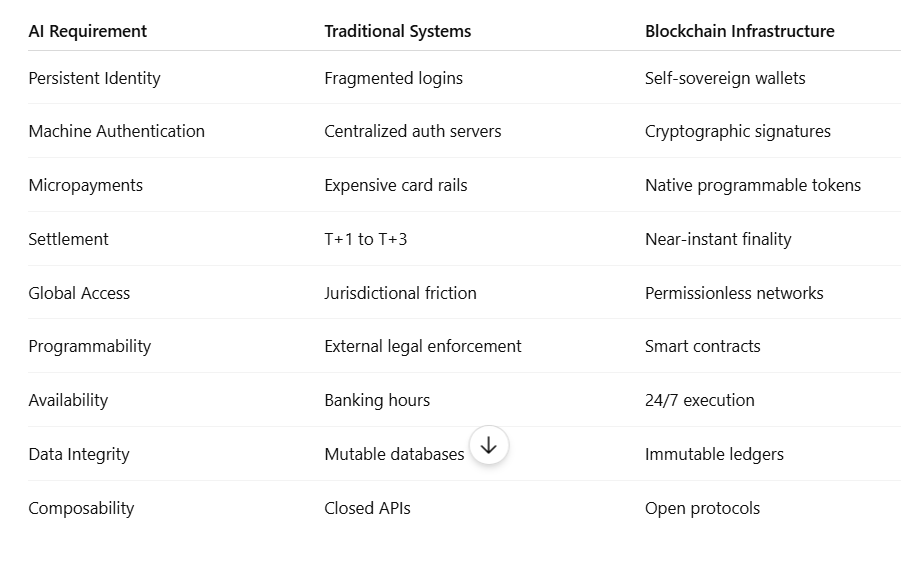
This is not incremental improvement.
It is a different computational architecture for economic coordination.
↓ Continue below for the detailed breakdown of the emerging AI + crypto infrastructure stack and how autonomous economies may reshape global finance, payments, identity, and digital coordination.
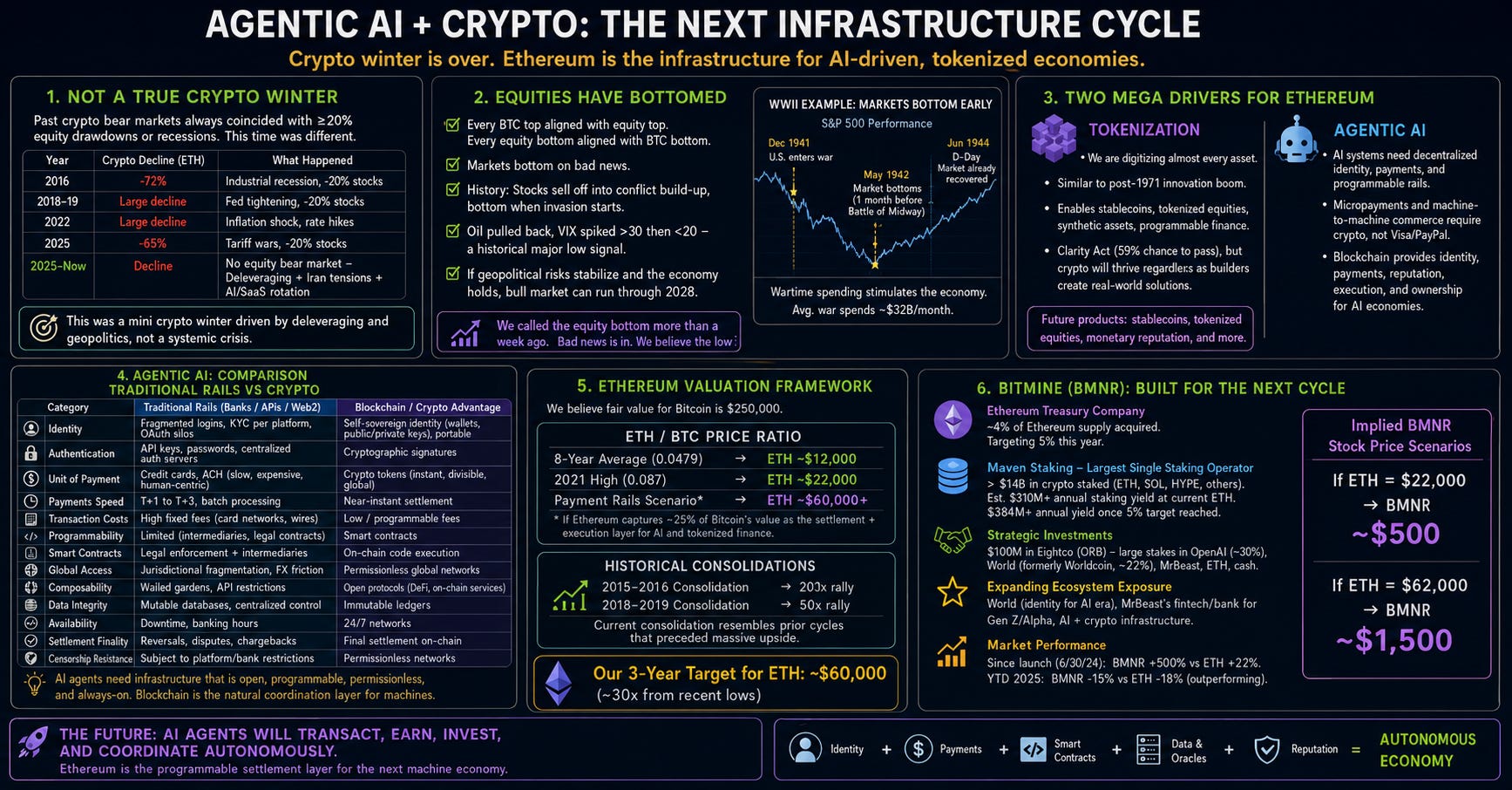
The Rise of Autonomous Commerce
The next internet economy will likely involve billions of machine-to-machine interactions occurring continuously.
Examples include:
AI agents buying inference capacity
autonomous compute marketplaces
decentralized GPU leasing
AI-to-AI API payments
machine-managed liquidity systems
robotic logistics coordination
autonomous trading agents
decentralized data exchanges
Traditional payment systems fail economically at this level of granularity.
A card network charging fixed fees cannot support sub-cent autonomous transactions occurring millions of times per hour.
Blockchain networks can.
That distinction matters enormously.
Why Stablecoins May Become AI-Native Money
One of the least appreciated developments in finance is the rise of stablecoins as programmable settlement infrastructure.
AI systems do not care about:
bank branding
branch networks
paper statements
They care about:
programmable liquidity
instant settlement
low-friction transferability
API-native execution
Stablecoins increasingly satisfy those requirements better than legacy rails.
This is why stablecoins are evolving beyond “crypto products.”
They are becoming machine-economy payment primitives.
Ethereum’s Strategic Position
If Bitcoin becomes the reserve collateral asset of the digital economy, Ethereum increasingly looks positioned to become its programmable settlement layer.
Ethereum combines:
programmable execution
smart contract infrastructure
tokenization rails
decentralized finance
staking security
composability
developer ecosystems
institutional adoption
This matters because tokenization and AI converge on the same requirement:
programmable coordination infrastructure.
The future economy may require:
tokenized assets
programmable ownership
autonomous payments
decentralized identity
machine-verifiable execution
Ethereum already provides much of that stack.
Tokenization Is Bigger Than Most Investors Realize
The market still underestimates the implications of tokenization.
This is not merely “stocks on-chain.”
Tokenization transforms:
ownership
settlement
collateralization
liquidity formation
composability
capital efficiency
Every asset class eventually becomes digitally programmable:
equities
bonds
commodities
real estate
intellectual property
compute resources
AI models
reputation systems
Once assets become programmable:
they can interact autonomously
they can be collateralized dynamically
they can settle globally in real time
they can integrate directly into AI systems
That creates an entirely new financial operating system.
AI Needs Decentralized Identity
One of the largest unsolved problems in AI is identity verification.
As synthetic content proliferates, distinguishing:
humans
agents
bots
authenticated entities
becomes increasingly difficult.
This is why decentralized identity systems are becoming strategically important.
Projects tied to:
wallet-based identity
cryptographic attestations
proof-of-personhood
verifiable credentials
may become foundational infrastructure for the AI era.
Without trusted identity systems, autonomous digital economies cannot scale safely.
Why the Market May Be Mispricing Ethereum
Markets often price crypto through short-term sentiment cycles.
But infrastructure transitions are nonlinear.
Historically:
railroads
electricity
telecom
cloud computing
mobile internet
all experienced periods where infrastructure appeared overbuilt before becoming indispensable.
Blockchain infrastructure may be following a similar adoption curve.
If:
tokenization accelerates
stablecoins scale globally
AI agents transact autonomously
machine-native commerce expands
then programmable blockspace becomes economically valuable.
That reframes Ethereum entirely.
Not as a speculative token.
But as:
settlement infrastructure
financial middleware
autonomous execution infrastructure
machine-economy coordination architecture
The Emerging Stack
A plausible architecture for the next digital economy could look like this:
Reserve Collateral
Bitcoin
Programmable Settlement Layer
Ethereum
Transactional Liquidity
Stablecoins
Identity Layer
Decentralized identity protocols
Compute Layer
Decentralized GPU and inference networks
Coordination Layer
Smart contracts + AI agents
Economic Actors
Autonomous machine systems
This is no longer theoretical.
The infrastructure is already being assembled.
The Next Cycle May Look Very Different
Previous crypto cycles were dominated by:
speculative leverage
retail enthusiasm
meme narratives
liquidity excesses
The next cycle may increasingly be driven by:
institutional tokenization
AI infrastructure demand
machine-native finance
programmable capital markets
decentralized compute economies
That transition could dramatically alter how digital assets are valued.
Final Thoughts
The critical question is no longer:
“Will crypto survive?”
The more important question is:
“What infrastructure does an autonomous digital economy require?”
Because once AI systems begin transacting, coordinating, negotiating, and allocating resources autonomously, entirely new economic rails become necessary.
And those rails increasingly resemble blockchain infrastructure.
The convergence of:
AI
tokenization
decentralized identity
programmable finance
autonomous coordination
may become one of the defining technological shifts of the next decade.
Crypto is no longer just competing with finance.
It may be evolving into the operating system for machine-native economies.
Also read, Crypto Finality: The Missing Primitive of the Agent Economy
—
Crypto Exponentials
Bridging AI, blockchain, decentralized infrastructure, and the future of exponential systems.
=======
Your IBIT position is idle. Here’s how to fix that.
Most IBIT holders are doing one thing: waiting. Waiting for BTC to appreciate. Leaving premium on the table every single week.

The Bitcoin ETF Options Income Playbook is built specifically for IBIT – not SPY, not generic ETFs, not theoretical options theory. Five complete frameworks covering covered calls, cash-secured puts, collars, IV timing, and roll defense. Real strikes, real numbers, real examples.
Target yield: 2–5% monthly. Price: $6.99.
The only IBIT-specific options income guide available on Amazon.
Get it on Kindle → Free quick-start cheat sheet →
=================
The DeFi Income Playbook
A complete practitioner’s field guide to generating real yield from decentralized finance - from your first $500 deposit to institutional-grade multi-chain income strategies. → Get it here